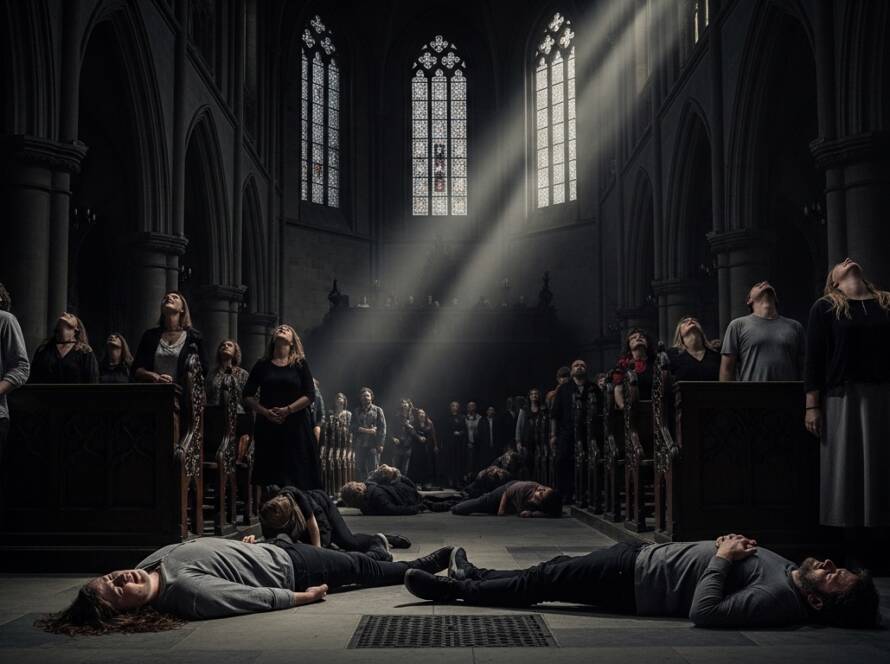
It began quietly in East Africa, particularly in places like Rwanda and Uganda, during a time when Christianity was already present but often blended with routine and cultural form. Beneath the surface, however, there was a growing tension, a sense among some believers that their lives did not match the faith they professed. This unrest did not come from outside pressure but from within, as though a light had begun to shine into hidden places.
A group of believers, deeply burdened, began to seek God with unusual sincerity. Among them were Africans and missionaries alike, including Simeon Nsibambi and Joe Church, who would become closely associated with what followed. Their focus was not on organizing meetings but on walking in truth, allowing God to search their hearts completely.
What followed was not loud at first, but it was unmistakable. Conviction began to spread, not as fear imposed from preaching, but as an inner awakening that made it impossible to hide. People started confessing sins openly, not only to God but to one another. Long-hidden grudges were brought into the light. Broken relationships were restored. There was no room left for pretense.
This movement became known for a simple but piercing expression, often called “walking in the light.” It meant living with nothing concealed, allowing God’s truth to shape every part of life. As this took hold, entire communities were affected. People gathered not just for meetings, but for honest fellowship, where testimonies were real and repentance was visible.
The revival spread across borders, moving through Uganda, Rwanda, Kenya, and Tanzania. It carried no single personality, no central stage, yet its mark was consistent everywhere it went. Lives changed deeply, not temporarily. Holiness was no longer an idea, it became a lived reality.
Even those outside the church could not ignore it. There was a noticeable difference in how people lived, spoke, and related to one another. Integrity increased. Unity grew. The presence of God was not just experienced in gatherings, but reflected in daily life.
🌱 What It Produced
• A culture of radical honesty and confession
• Restored relationships and deep unity among believers
• A lifestyle of holiness rather than occasional spiritual moments
• Communities marked by integrity and transparency
• A lasting influence on African Christianity