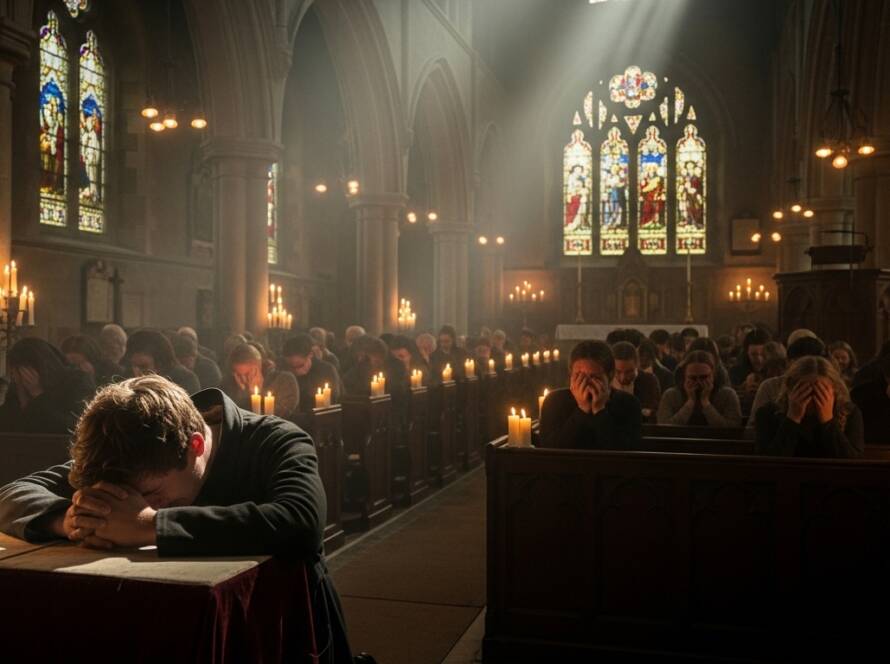
It began in a small church near Toronto, Canada, where meetings were being held with a simple desire, that God would move in a fresh way. There was no sense that what started there would spread across the world. Yet, from the very first gatherings, something unexpected began to happen.
At the Toronto Airport Vineyard Church, people came together for worship and prayer, but the atmosphere quickly shifted beyond the usual. During meetings, individuals began to experience intense and visible reactions. Some wept deeply, others laughed uncontrollably, and many spoke of a strong sense of God’s presence resting on them.
It was not planned.
It was not structured.
And it was not easily explained.
As the meetings continued, word spread rapidly. People traveled from different cities and nations, drawn by reports of what was happening. Night after night, the church filled with those hungry for an encounter. Some came curious, others skeptical, but many left changed in ways they could not deny.
One of the leading voices during this time was Randy Clark, whose ministry became closely associated with the movement. Yet, unlike many revivals centered around strong personalities, this one was defined more by the experiences people had than by who stood on the stage.
The defining feature of this revival was its expressions. Joy became one of its strongest marks. People laughed freely, sometimes for long periods, describing it as a release they had never known. Others fell into deep stillness, overwhelmed by what they believed was the presence of God. For many, inner wounds were healed in these moments, not through counseling, but through encounter.
At the same time, it stirred conversations across the wider church. Some embraced it fully, seeing it as a genuine move of God. Others questioned its manifestations, unsure of what to make of such unusual expressions. Yet regardless of perspective, its impact could not be ignored.
The movement spread beyond Canada, influencing churches and gatherings in different parts of the world. Conferences were held, testimonies multiplied, and a new openness to spiritual experience began to emerge in many places.
For those who were part of it, the memory was clear. It was not just about what they saw…
it was about what they felt, something real, personal, and deeply affecting.
🌱 What It Produced
• A renewed hunger for experiencing God personally
• Emotional and inner healing for many individuals
• A global conversation about spiritual manifestations
• Churches becoming more open to expressive worship
• A generation exposed to a different dimension of encounter