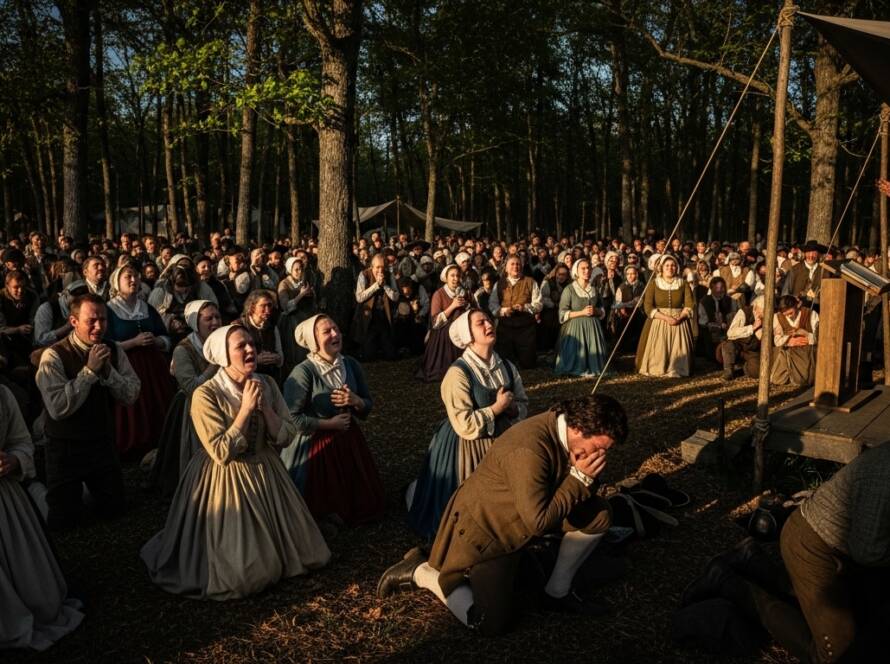
“Bend Me, O Lord”
In the quiet valleys of Wales, where coal mines shaped daily life and hardship was normal, God began to move—not through a famous pulpit, but through a young man with a burden.
His name was Evan Roberts.
He was only 26 years old. A miner. Unknown. Uncelebrated.
But inside him burned a cry that refused to go away.
The Hidden Price Before the Fire
Long before crowds gathered, Evan Roberts was alone with God.
For years, he prayed—often late into the night—while others slept. He wrestled with God in private places, asking not for success, not for recognition, but for one thing:
” Lord bend me”
This was not a poetic prayer. It was costly.
“Bending” meant:
- Surrendering his will completely
- Letting God deal with pride, fear, and ambition
- Yielding his future, reputation, and comfort
There were moments of deep inner struggle. Times of emotional and spiritual intensity that others around him did not fully understand. But something was being forged.
When Revival Broke
In 1904, Evan began gathering small groups—mostly young people. No big announcements. No strategy.
Just hunger.
The meetings were unusual:
- No fixed program
- No polished sermons
- Long silences… then sudden prayers
- People weeping, confessing, worshipping
And then suddenly—God came.
Not in noise, but in weight.
A deep awareness of God’s presence settled in the room.
Conviction That Could Not Be Ignored
This revival was marked by something rare today: uncontrollable conviction of sin.
People didn’t need to be persuaded or emotionally manipulated.
They felt God.
- Men publicly confessed hidden sins
- Stolen goods were returned
- Broken marriages were restored
- Lifelong habits were abandoned overnight
It was not hype—it was holiness confronting humanity.
⚔️ Opposition and Strain
Not everyone celebrated what was happening.
Some church leaders grew uncomfortable:
- The meetings had no structure
- Young people were leading
- Emotional expressions were intense
Evan himself came under pressure:
- Criticism from religious circles
- Physical and emotional exhaustion
- The weight of leading something he did not control
At one point, the strain became so heavy that he had to step back from public ministry.
Revival was powerful—but it was not easy.
🌍 When a Nation Felt It
What happened next was undeniable.
The effects spilled out of church buildings into society:
- Taverns emptied—business collapsed
- Crime rates dropped so drastically that police had little to do
- Courts saw fewer cases
- Coal miners stopped using foul language
There’s even a famous account:
The horses in the mines had to be retrained… because they no longer understood the workers’ commands—everything had changed.
More Than Numbers
Over 100,000 people were added to churches.
But numbers don’t tell the real story.
The real story was:
- A nation awakened
- A generation marked by God
- A reminder that revival is not noise—it is transformation
What This Revival Still Says Today
- Revival begins in hidden places, not public platforms
- God is drawn to surrender, not performance
- The presence of God does what no system can do